Signal Monitoring
Track price action, volume behavior, volatility, funding data, and technical indicators in one repeatable workflow.
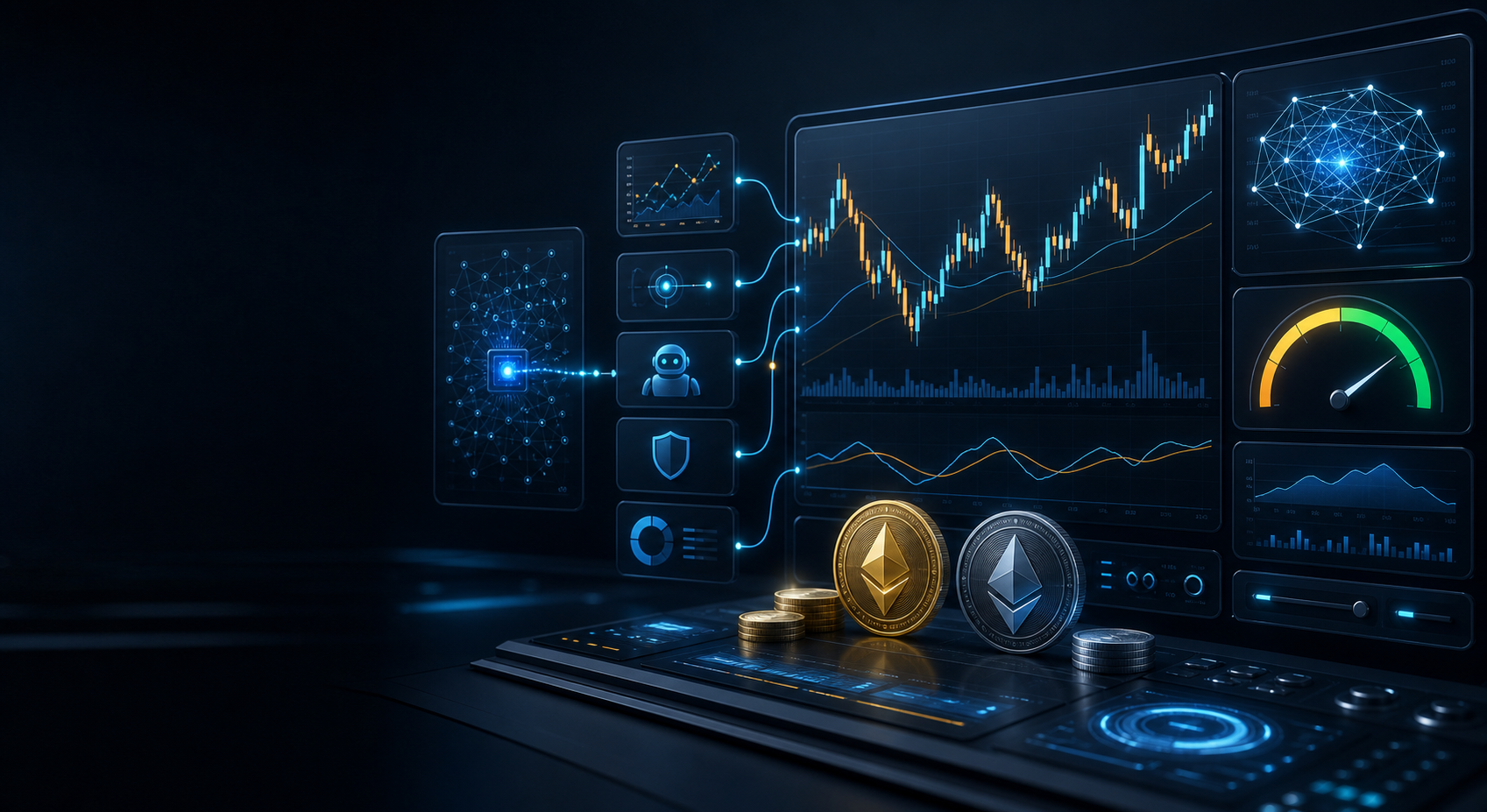
againprxpz.bond explains how AI crypto trading bot systems monitor markets, build signals, automate repeatable workflows, and keep risk controls visible before any trade is placed.
AI crypto trading bot platforms are moving from simple rule execution toward signal ranking, portfolio guardrails, exchange monitoring, and strategy testing. The best setups do not promise effortless profit. They help traders create disciplined rules, measure market conditions, and avoid emotional decision making.
Track price action, volume behavior, volatility, funding data, and technical indicators in one repeatable workflow.
Use predefined entry, exit, stop, and allocation rules so the bot follows a plan instead of reacting to noise.
Set position limits, cooldowns, drawdown alerts, and manual approval steps before live execution.
Grid bots place structured buy and sell orders across a price range. They can suit sideways markets, but they still require careful range selection and risk limits.
Dollar-cost averaging bots split entries into smaller planned purchases. This can reduce timing stress but does not remove market risk.
Signal bots use indicators, alerts, or AI scoring to trigger actions. Quality depends on testing, data cleanliness, and strict execution controls.
Choose the assets, time frames, and trading style before selecting a bot. A scalping workflow needs different controls than a long-term DCA setup.
Run backtests and paper trading. Look for drawdown, trade frequency, fees, slippage, and performance across different market conditions.
Set max position size, stop-loss logic, daily loss limits, and emergency pause rules before using real funds.
Markets change. Recheck assumptions, API security, exchange status, and bot logs on a fixed schedule.
Educational disclaimer: againprxpz.bond does not provide financial advice. Crypto trading is risky, and automated systems can lose money.
It is software that uses data, rules, models, or signal scoring to help monitor crypto markets and automate predefined trading actions.
No. No trading bot can guarantee profit. Market volatility, fees, liquidity, exchange outages, and poor settings can all create losses.
Backtesting is useful, but it should be paired with paper trading, fee assumptions, slippage checks, and small-scale live validation.
Many platforms offer no-code templates, but understanding strategy logic, API permissions, and risk controls is still important.
Many beginners start by studying DCA or grid bot workflows because the rules are easier to understand. Suitability still depends on the trader's goal and risk tolerance.